Whynter Air Conditioners Breakdown: Which Model Fits Your Home?
As Amazon Associates, we earn from qualifying purchases. This means we may receive a small commission at no extra cost to you if you click through and make a purchase.
Whynter has established a solid reputation among families seeking dependable seasonal climate control without the expense of permanent ductwork modifications or window-unit installations. Known throughout the home appliance industry for robust engineering and dual-hose airflow mechanics, Whynter portable air conditioners are built to resolve the common pitfalls of portable cooling: uneven room temperatures, outdoor heat infiltration, and excessive electricity usage. For busy households balancing nursery comfort, home office productivity, and family gathering spaces, investing in reliable portable equipment requires understanding how different compressor designs and airflow formats handle real summer heat loads.
While all three units featured in this guide deliver dependable multi-mode cooling and automated moisture exhaust, they differ significantly in their compressor technology, coverage area ratings spanning from 300 to 600 square feet, and smart digital connectivity options.
Product rundown
3 models are covered below. Pick a row to jump straight to it.
| No. | Model | Price |
|---|---|---|
| 01 |
 Whynter Portable Air Conditioner 13000 BTUBest for Mid-Sized Family Living Areas |
Price not listed |
| 02 |
 Whynter Portable Air Conditioner Inverter 14000Best for Large Open Spaces |
Price not listed |
| 03 |
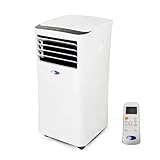 Whynter Portable Air ConditionerBest for Small Bedrooms and Nurseries |
Price not listed |
Whynter Portable Air Conditioners Compared

Best for: Small bedrooms, nurseries, and compact home offices
Pros
- Compact 14-inch square chassis
- Dual-hose airflow balance
- Activated carbon and washable filters
- Patented auto drain function
Cons
- No variable-speed inverter compressor
- No Wi-Fi or smartphone control

Best for: Large living spaces requiring ultra-quiet operation
Pros
- Powerful 14,000 BTU cooling
- Whisper-quiet 42.5 dB sound
- Hose-in-hose dual exhaust configuration
- Auto drain exhausts 87 pints daily
Cons
- Larger 32.5-inch tall chassis
- 1293-watt peak power draw

Best for: Mid-sized living rooms and primary master bedrooms
Pros
- 13,000 BTU cooling capacity
- NEX inverter energy efficiency
- Smart Wi-Fi and voice control
- 5 fan speeds with auto louver
Cons
- 1212-watt power draw
- 50 to 56 dBA noise range
Conducting a direct Whynter air conditioner comparison allows homeowners to match room dimensions and sound tolerances to the right equipment. The table below details key performance benchmarks gathered directly from manufacturer specifications across these three residential appliances.
| Model | Cooling Capacity | Coverage Area | Noise Level | Compressor Type |
|---|---|---|---|---|
| Whynter Portable Air Conditioner 13000 BTU (ARC-1280WX) | 13,000 BTU (10,000 BTU SACC) | Up to 500 sq. ft. | 50 dBA | Inverter Compressor |
| Whynter Portable Air Conditioner Inverter 14000 (ARC-1230WN) | 14,000 BTU (12,000 BTU SACC) | Up to 600 sq. ft. | 42.5 dB | Rotary Scroll Inverter |
| Whynter Portable Air Conditioner (ARC-102CS) | 10,000 BTU (7,000 BTU SACC) | Up to 300 sq. ft. | 51.5 dB | Rotary Scroll (No Inverter) |
Whynter Portable Air Conditioner 13000 BTUBest for Mid-Sized Family Living Areas

The Whynter Portable Air Conditioner 13000 BTU (model ARC-1280WX) is engineered for residential living areas and primary suites that demand high energy efficiency alongside modern digital integration. Operating on a standard 115-volt corded electric connection, this Whynter inverter air conditioner utilizes an advanced NEX Inverter compressor that adjusts operational speeds dynamically instead of abruptly cycling on and off. It delivers 13,000 BTU ASHRAE cooling power (rated at 10,000 BTU SACC) using eco-conscious R-32 refrigerant, effectively cooling living spaces up to 500 square feet. Families exploring options similar to an advanced midea dual hose portable ac will appreciate the balanced dual-hose airflow mechanics on this unit, which prevent negative pressure from pulling unconditioned outdoor air into the room.
Everyday family convenience is prioritized through a suite of digital controls and mechanical refinements. The unit connects directly to the NetHome Plus application over Wi-Fi, allowing parents to adjust temperature settings remotely before arriving home or manage cooling routines via voice commands using Amazon Alexa, Google Home, or Apple Siri. Inside the living space, conditioned air is distributed through a five-speed fan and an automated 80-degree flexible airflow louver, ensuring draft-free circulation rather than a harsh, static blast. Additional features include a 24-hour programmable timer, dedicated sleep mode, a broad thermostatic range spanning 60°F to 86°F, and a dual-stage filtration system combining a washable air filter with an activated carbon insert to catch airborne debris and household odors.
From an acoustic standpoint, the unit generates between 50 and 56 dBA during active operation, keeping background noise manageable during family conversations or daytime work. With an Energy Efficiency Ratio (EER) of 9.9 and an operational wattage draw of 1212 watts, the ARC-1280WX provides balanced daily cooling for mid-sized floor plans. It suits active living rooms and master bedrooms where smartphone automation and flexible airflow louvers are desired. However, households with sprawling open-concept spaces exceeding 500 square feet will find greater reserve cooling capacity in Whynter’s larger 14,000 BTU inverter variant.
Whynter Portable Air Conditioner Inverter 14000Best for Large Open Spaces

Designed for larger spaces up to 600 square feet, the Whynter Portable Air Conditioner Inverter 14000 (model ARC-1230WN) represents the brand’s highest output inverter solution in this lineup. Delivering 14,000 BTU ASHRAE (12,000 BTU SACC) of cooling power, this stand-up floor air conditioner features a variable-speed rotary scroll inverter compressor that offers up to 20% more cooling and 40% more efficient energy consumption compared to standard fixed-speed systems. Its defining physical characteristic is an innovative extendable hose-in-hose design that stretches up to 47 inches, nesting the intake and exhaust passages into a single outer assembly to eliminate heat leakage and simplify window installation.
Sound management is an exceptional strength of this model, operating as low as 42.5 dB, which makes it the quietest Whynter air conditioner in the catalog despite its substantial capacity. Homeowners managing sticky summer weather can utilize three versatile operational modes: cooling, fan-only with three selectable speeds, and dehumidification. Its integrated dehumidifier and patented auto drain function work together to exhaust up to 87 pints of moisture per day directly out the window under standard conditions, drastically reducing the hassle of manual water bucket management. Thermostatic controls span from 60°F to 86°F, with overall electrical requirements specified at 115 volts, drawing up to 1293 watts and 11.9 amps under maximum cooling load.
Complete with an included window kit capable of expanding up to 82 inches, a washable air filter, and NetHome Plus Wi-Fi compatibility with Alexa and Google Home, the ARC-1230WN provides comprehensive whole-room climate management. Measuring 19.5 inches wide, 16.75 inches deep, and 32.5 inches high, its substantial chassis occupies noticeable floor real estate, making it best suited for open living rooms, basement entertainment spaces, or large master suites. If you are comparing versatile cooling options across different brands, such as a costway portable air conditioner, this Whynter flagship stands out for its specialized hose-in-hose thermal sealing and whisper-quiet motor operation. For compact bedrooms under 300 square feet, however, this model’s high cooling output and larger footprint may be excessive.
Whynter Portable Air ConditionerBest for Small Bedrooms and Nurseries

Homeowners seeking focused cooling for secondary bedrooms, compact guest rooms, or dedicated home offices can look to the Whynter Portable Air Conditioner (model ARC-102CS). With a cooling capacity of 10,000 BTU ASHRAE (7,000 BTU SACC), this packaged floor air conditioner is optimized for spaces up to 300 square feet. It employs an efficient rotary scroll compressor running on R-32 refrigerant, maintaining steady cooling performance with a maximum power draw of 1110 watts and 9.8 amps. Unlike simpler single-hose portable designs, this model utilizes an engineered dual hose portable AC configuration to ensure balanced room pressure, preventing warm outdoor drafts from entering through doors and floorboards.
Moisture removal and indoor air cleanliness are central to the ARC-102CS design. The unit features an internal dehumidifying capacity of up to 68 pints per day and incorporates a patented auto drain function that automatically exhausts collected condensate through the exhaust stream in most environments. For continuous operation in persistently muggy regions, upper gravity and lower manual drain ports offer flexible drainage routing. Air filtration is handled through a two-part setup consisting of a washable pre-filter for pet dander and large particulates alongside an activated carbon filter to help capture lingering household odors, making it an excellent candidate as the best Whynter AC for bedroom environments.
With physical dimensions of 14 inches wide, 14 inches deep, and 28 inches high, this unit boasts the most compact footprint in Whynter’s dual-hose family, making it easy to position alongside nightstands or work desks. While shoppers considering an air choice portable air conditioner often weigh basic room fit against cooling efficiency, the ARC-102CS delivers consistent thermostatic adjustments between 62°F and 86°F and runs at 51 to 51.5 dBA on low fan speed. It does lack the smart Wi-Fi controls and inverter compressor technology found on its larger siblings, meaning it will cycle its compressor fully on and off to maintain temperature. For single rooms within its 300-square-foot rating, it offers straightforward, dependable climate control.
How to Choose the Right Whynter Portable Air Conditioners
Selecting which Whynter air conditioner to buy comes down to evaluating square footage, compressor mechanics, noise sensitivity, and preferred control methods. Every cooling application has distinct airflow demands; matching the physical dimensions of your space to the appliance’s rated British Thermal Units (BTU) ensures that the unit cools effectively without short cycling or running constantly.
Room size serves as the primary benchmark. For compact nurseries, guest rooms, or home offices measuring up to 300 square feet, the 10,000 BTU ARC-102CS provides an appropriately scaled solution with a minimal floor footprint. Moving up to master bedrooms or mid-sized family rooms up to 500 square feet requires the 13,000 BTU capacity of the ARC-1280WX. For expansive primary suites, open-concept living rooms, or apartments up to 600 square feet, the 14,000 BTU ARC-1230WN provides the reserve cooling power necessary to pull heat out of large air volumes.
Compressor technology represents the next major decision point. Standard rotary scroll compressors, such as the one inside the ARC-102CS, operate on a traditional on-off cycle to maintain set temperatures, which works well for intermittent cooling or straightforward single-room utility. In contrast, Whynter inverter air conditioner models adjust motor output seamlessly, saving energy, maintaining tighter temperature consistency, and reducing overall operating volume.
Sound tolerance is critical if you are installing an air conditioner in a bedroom, nursery, or video-conferencing space. With sound emissions tested down to 42.5 dB, the ARC-1230WN holds the title of quietest Whynter air conditioner in this group, making it an exceptional choice for light sleepers. The ARC-1280WX operates between 50 and 56 dBA, while the ARC-102CS generates around 51.5 dB, both remaining within comfortable thresholds for daytime living spaces.
Finally, consider convenience features such as digital Wi-Fi connectivity and airflow adjustments. Both the ARC-1280WX and ARC-1230WN integrate with the NetHome Plus application and voice assistants, allowing automated scheduling and remote temperature changes while away from home. The ARC-1280WX adds a multi-angle automatic oscillating louver with five fan speeds, whereas the mechanical simplicity of the ARC-102CS appeals to users who prioritize physical push-button controls without network setup.
FAQ
What is the benefit of a Whynter dual hose portable AC over single hose models?
A dual-hose design utilizes one dedicated hose to draw in outdoor air for cooling the condenser coils and a second hose to exhaust the heated air outside. In contrast to single-hose systems, which suck conditioned indoor air over the condenser and vent it outdoors—creating negative air pressure that pulls hot, humid outdoor air through doors and window cracks—a dual-hose system maintains neutral air pressure inside the room for faster and more efficient cooling.
Which Whynter air conditioner is best for a quiet bedroom?
The Whynter ARC-1230WN is the quietest model among these three, operating at sound levels as low as 42.5 dB thanks to its variable-speed inverter compressor. Because the compressor modulates its output smoothly rather than switching on and off with an abrupt click and motor surge, it provides a quiet, consistent acoustic backdrop suitable for light sleepers and nurseries.
How does inverter technology work in Whynter portable air conditioners?
Inverter technology allows the air conditioner’s compressor motor to run at varying speeds depending on the room’s current thermal demand. Once the room reaches the target temperature set on the thermostat, the inverter slows down the compressor to maintain that level steadily. This avoids the constant electrical spikes and temperature fluctuations associated with traditional on-off compressors, yielding higher energy efficiency.
Do Whynter portable air conditioners require manual water draining?
Under standard operating conditions, all three models feature self-evaporating or patented auto drain functions that exhaust condensate moisture automatically through the warm exhaust hose. However, in regions with exceptionally high humidity, condensate may accumulate faster than the system can exhaust, requiring the user to connect a drain hose to the built-in upper gravity or lower manual drain ports.
What maintenance is required on Whynter portable air conditioner filters?
Maintenance involves washing the primary mesh pre-filter every two to four weeks depending on household dust and pet hair levels. The washable filter can be rinsed under warm running water and allowed to air dry completely before reinstallation. If your model includes an activated carbon filter, that insert should be inspected periodically and replaced when it becomes saturated to maintain effective odor absorption.
- The Best LG ThinQ Washer and Dryer Options for Everyday Family Laundry 9.0/10Our score
- LG Top Load Washer Guide: Comparing the Most Reliable Family Models 9.4/10Our score
- Mi-T-M Pressure Washer Essentials: Key Upgrades and Maintenance Picks 9.6/10Our score
- Puracy Baby Laundry Detergent Lineup: Formula & Stain Removal Breakdown 8.2/10Our score
- Shark Plus 2-in-1 Vacuum Cleaner Lineup: Which Model Fits Your Home? 8.8/10Our score
- Which OxiClean Laundry Pods Are Best for Your Family Wash Loads? 8.6/10Our score