Choosing Bike Computers in 2026: The Specs That Matter and 8 Picks
As Amazon Associates, we earn from qualifying purchases. This means we may receive a small commission at no extra cost to you if you click through and make a purchase.
As an Amazon Associate we earn from qualifying purchases. Links on this page are affiliate links.
This bike computer buying guide helps you choose the right device for your rides. You will decide between touchscreen interfaces and physical buttons, or between solar charging and standard battery life. The selection process focuses on display size, weight, and connectivity options. These factors determine how easy the device is to read while cycling and how well it tracks your performance data.
We selected these 8 models by comparing their published specifications. The list includes options for long-distance riders, navigational clarity seekers, and minimalist users. Each pick is ranked based on how its specs match specific cycling needs. You can find devices with precise GPS, eBike integration, or bundled sensors. This guide walks you through the technical details so you can match a computer to your riding style.
Key Specs for Bike Computers
Display size and visibility
Screen size determines how much data you can view at a glance. Larger displays, such as the 4.6-inch Garmin Edge 1040 Solar, show more maps and metrics simultaneously. This is useful for long rides where you need constant orientation. Smaller screens, like the 2.3-inch width on the Edge 540, offer a compact profile for riders who prefer minimalism. You should match screen size to your riding style. If you rely heavily on turn-by-turn navigation, a larger screen reduces eye strain. If you primarily track speed and distance, a smaller display may suffice. Consider glare resistance for sunny conditions, as solar panels often accompany larger screens to maintain battery life.
Look for
- Screen width in inches
- Sunlight readability rating
- Touchscreen vs. button control
Weight and form factor
The weight of the device affects comfort on the handlebars. Lighter units, such as the 2.8-ounce Garmin Edge 540, are less likely to drag on the bars or feel cumbersome during climbs. Heavier devices, like the 5-ounce Edge 1060, often include larger batteries or additional hardware. You should consider the total weight including the mount. A lighter computer is preferable for competitive cyclists who minimize every gram. Casual riders may not notice a difference. Check the dimensions to ensure the device fits your handlebar clamp securely. Compact designs often sacrifice battery capacity or screen real estate, so balance size with your power needs.
Look for
- Device weight in ounces
- Overall height and width
- Mount compatibility
Battery and charging method
Battery life dictates how long you can ride without recharging. Solar charging, found on the Edge 1040 Solar, extends battery life in bright conditions, allowing for multi-day tours without a power bank. Standard battery computers require manual charging but often have consistent performance regardless of lighting. You should estimate your daily ride duration and compare it to the device’s rated battery life. If you ride in shaded areas or at night, solar features offer less benefit. Consider whether the device supports external power banks for extended expeditions. Reliable charging options ensure you do not run out of power during critical navigation moments.
Look for
- Battery life in GPS mode
- Solar charging capability
- USB-C or proprietary port
Connectivity and sensors
Connectivity options allow the computer to sync with other devices and sensors. Most listed models use GPS for location tracking. Some, like the iGPSPORT BSC500, include bundled sensors for heart rate and cadence. Others rely on smartphone connectivity for data sync. You should check if the device supports ANT+ and Bluetooth to connect external sensors like power meters or speed sensors. Built-in sensors reduce the need for additional hardware. Smartphone integration allows for smart alerts and music control. Ensure the connectivity type matches your existing gear to avoid compatibility issues. Dedicated cycling computers often offer more robust sensor connections than general fitness trackers.
Look for
- GPS and GLONASS support
- ANT+ and Bluetooth pairing
- Bundled sensor availability
Navigation and mapping features
Navigation capabilities vary from basic breadcrumb trails to full-color topographic maps. Devices like the Edge Explore 2 focus on clear map visibility and eBike routing, making them ideal for casual riders. Performance-oriented models like the Edge 1060 offer detailed metrics and voice guidance. You should determine how complex your route planning is. If you ride on familiar local roads, basic navigation may be enough. For exploring new areas, full mapping with turn-by-turn directions is essential. Consider if the device supports third-party map applications. Some models prioritize simplicity, while others offer extensive customization for data fields and map layers.
Look for
- Preloaded map coverage
- Turn-by-turn voice prompts
- Third-party map support
Activity and sport focus
Some computers are optimized for specific activities. The Wahoo ELEMNT Bolt V3 targets minimalist riders who prefer app-driven experiences and smartphone sync. Garmin models often include dedicated metrics for climbing and performance analysis. You should choose a device that aligns with your primary activity. If you ride multiple sports, ensure the computer supports those modes. Dedicated cycling computers provide more accurate cycling-specific data than multi-sport watches. Consider if you need separate profiles for mountain biking, road cycling, or eBiking. The right focus ensures you get the most relevant data without unnecessary clutter.
Look for
- Supported sport profiles
- Climbing metric accuracy
- Ebike integration support
Types of Bike Computers Available
Solar-powered long-range units
These devices use photovoltaic cells to extend battery life in bright conditions. You get extra range on multi-day tours without carrying spare batteries. The trade-off is a larger, heavier form factor that may feel bulky on the handlebars. The Garmin Edge 1040 Solar weighs 4.7 ounces and measures 4.6 inches wide. This size accommodates detailed maps but requires a secure mount. You benefit from extended tracking on sunny days, but performance drops in shade or overcast weather. This type suits riders who prioritize maximum endurance over lightweight comfort.
Performance-focused button devices
These computers rely on physical buttons for input, offering tactile control in rain or with gloved hands. You avoid accidental touches while navigating rough terrain. The trade-off is a smaller screen that shows less data at once. The Garmin Edge 540 and 840 models weigh around 2.8 ounces and measure roughly 2.3 inches long. They provide precise multi-band GPS and climbing metrics. You get reliable operation in all weather conditions. This type fits dedicated cyclists who value data accuracy and direct control over large touchscreen interfaces.
Navigation-centric touchscreen models
These units prioritize map clarity and intuitive touch interaction for route finding. You benefit from clear visual guidance and easy menu navigation. The trade-off is reduced battery efficiency and potential glare on bright screens. The Garmin Edge Explore 2 features a 3-inch display and weighs 4.1 ounces. It supports eBike integration and straightforward routing. You get excellent map visibility for casual rides. This type suits riders who need reliable navigation without complex performance tracking or extensive data analysis.
Common Mistakes To Avoid
Ignoring phone compatibility requirements
You assume all sensors work with every phone. Check compatibility lists before buying. GPS accuracy varies by chip quality. Ensure the device supports your specific smartphone model for seamless data sync and navigation updates without frustration.
Assuming universal mount fit
You overlook mount compatibility with your handlebars. Some computers require specific adapters for aero bars or standard round tubes. Verify the mounting system matches your bike frame to avoid unsafe installations or the need for extra purchases later.
Overlooking app dependency needs
You expect all features to work without an app. Many advanced metrics require downloading specific companion software. Ensure you are comfortable using the required app on your device to access full functionality and interpret your training data correctly.
Prioritizing screen size over battery
You choose based on screen size alone. A larger display drains battery faster. Consider your priority: detailed maps or extended ride time. Smaller screens often offer better endurance for long-distance cycling where recharging is not an option.
| # | Product | Best for | Price |
|---|---|---|---|
| 1 | Garmin Edge 1040 Solar | long rides in sunny conditions | |
| 2 | Garmin Edge 1060 GPS Cycling Computer | Performance-driven cyclists needing navigation and voice control | |
| 3 | Garmin Edge 540 GPS Cycling Computer | Cyclists needing precise GPS and climbing data | |
| 4 | Garmin Edge Explore 2 3-inch GPS | Navigational clarity and eBike integration | |
| 5 | Garmin Edge 840 GPS Cycling Computer | cyclists needing precise navigation and button controls | |
| 6 | iGPSPORT BSC500 GPS Bike Computer with Sensors | riders wanting a sensor bundle with map navigation | |
| 7 | Wahoo ELEMNT Bolt V3 GPS Cycling Computer | Minimalist riders using smartphone sync | |
| 8 | Garmin Explore 2 3" Touchscreen | simple map navigation and eBike routing |
Garmin Edge 1040 Solar
Best for: long rides in sunny conditions
- Connectivity
- GPS
- Features
- Solar Charging
- Color
- Black
- Dimensions
- 2.3 × 4.6 × 0.8 inches
- Weight
- 4.7 ounces
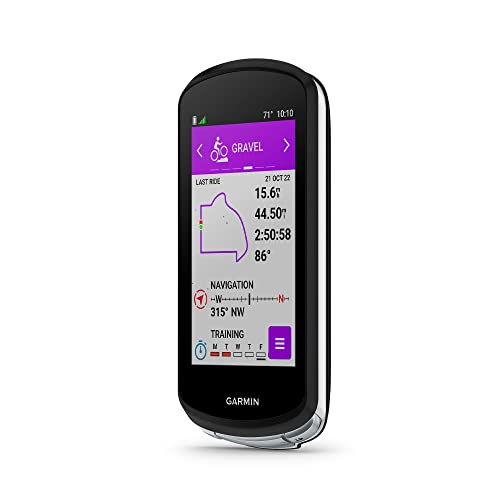
The Garmin Edge 1040 Solar is a GPS bike computer with solar charging. It measures 4.6 by 2.3 inches and weighs 4.7 ounces. The black unit offers solar power to extend battery life. It suits riders who want extended range without frequent charging. The solar feature helps maintain power during bright conditions.
- Solar charging capability extends battery life
- GPS connectivity for tracking
- 4.6-inch width provides ample screen space
- Lightweight 4.7-ounce build
- Heavier than the Edge 540 and 840
- Larger physical footprint than compact models
- You ride long distances in sunny weather
- You want solar charging to extend battery life
- You prefer a larger display for navigation
- You need the lightest possible mount
- You prefer a compact device for small hands
- You ride mostly in low light
Verdict: The Garmin Edge 1040 Solar fits riders who prioritize solar charging and a large display over a compact size. It is ideal for long rides in bright conditions where extended battery life matters most.

Garmin Edge 1060 GPS Cycling Computer
Best for: Performance-driven cyclists needing navigation and voice control
- Control Type
- Touchscreen, buttons, voice control
- Battery Life
- Up to 20 hours (up to 60 hr saver)
- Map Navigation
- Preloaded bike-specific maps
- Connectivity
- GPS
- Activity
- Cycling
- Color
- Black
The Garmin Edge 1060 is a premium GPS cycling computer designed for performance-driven riders. It features a vivid color touchscreen, physical buttons, and hands-free voice control. The device offers up to 20 hours of battery life, extending to 60 hours in saver mode. It includes preloaded bike-specific maps and advanced navigation. This unit suits cyclists who want detailed performance tracking and clear, interactive guidance during rides.
- Vivid color touchscreen display with physical button controls
- Hands-free voice control via built-in microphone
- Up to 20 hours of battery life (60 hours in saver mode)
- Preloaded bike-specific maps for route navigation
- Onboard speaker for workout prompts and bike bell alerts
- Battery life of 20 hours is lower than the 1040 Solar's solar-enhanced duration
- Weight of 5 ounces is heavier than the compact Edge 540 and 840 models
- Screen size is fixed without the larger 3.3-inch option found on the iGPSPORT BSC500
- You want a touchscreen interface combined with physical buttons
- You need preloaded maps for route navigation
- You value voice control and audio prompts during rides
- You prefer a smaller, lighter device under 5 ounces
- You require solar charging to extend battery life beyond 20 hours
- You want a larger 3.3-inch display for easier reading
Verdict: The Garmin Edge 1060 GPS Cycling Computer offers a balanced mix of touchscreen and button controls for riders who prioritize performance data and navigation. It fits cyclists who want detailed insights and clear audio guidance without needing solar charging.

Garmin Edge 540 GPS Cycling Computer
Best for: Cyclists needing precise GPS and climbing data
- Battery Life
- Up to 26 hours (42 hours saver)
- Satellite Positioning
- Multi-band GNSS
- Map Navigation
- Ride type-specific maps
- Connectivity
- GPS
- Activity
- Cycling
- Color
- Black
The Garmin Edge 540 is a compact GPS cycling computer with button controls. It features multi-band GNSS for precise positioning and offers up to 26 hours of battery life, or 42 hours in saver mode. The device includes ClimbPro for ascent tracking and adaptive coaching prompts. It suits cyclists who want reliable navigation and performance metrics in a small, 2.8-ounce package.
- Multi-band GNSS technology enhances positioning accuracy in challenging environments.
- Up to 26 hours of battery life in demanding use cases.
- ClimbPro ascent planner shows remaining ascent and grade on every ride.
- Targeted adaptive coaching adjusts to your training load and recovery.
- Battery life of 26 hours is lower than the 42-hour capacity of the iGPSPORT BSC500.
- Weight of 2.8 ounces is heavier than the 1.9-ounce Wahoo ELEMNT Bolt V3.
- Screen size is smaller than the 3.3-inch display on the iGPSPORT BSC500.
- You need precise GPS tracking in dense tree cover or urban canyons.
- You want detailed climbing data without pre-loading a course.
- You prefer physical buttons for operation while riding.
- You require solar charging for extended multi-day rides.
- You prioritize the lightest possible device for competitive racing.
- You need a larger screen for easier map reading.
Verdict: The Garmin Edge 540 Compact GPS Cycling Computer fits riders who value precise multi-band GPS and dedicated climbing metrics in a lightweight, button-controlled form factor.

Garmin Edge Explore 2 3-inch GPS
Best for: Navigational clarity and eBike integration
- Display Size
- 3"
- Control Type
- Touchscreen
- Satellite Positioning
- GPS
- Map Navigation
- Ride type-specific maps, eBike routing
- Activity
- Cycling
- Color
- White
The Garmin Edge Explore 2 is a GPS cycling navigator designed for straightforward route guidance. It features a 3-inch touchscreen that remains visible in direct sunlight and supports glove use. The device includes ride type-specific maps and eBike routing capabilities. It tracks distance, speed, and elevation via built-in GPS. You can pair it with sensors for heart rate and cadence data. This model suits riders who prioritize map clarity and ease of use over advanced performance metrics.
- 3-inch high-resolution touchscreen visible in direct sunlight
- Preloaded road, off-road, and indoor activity profiles
- Ride type-specific maps with searchable points of interest
- Built-in GPS for tracking distance, speed, and elevation
- eBike routing and battery status alerts when connected
- Touchscreen interface may be less precise in wet conditions compared to button controls
- 3-inch display is smaller than the 3.3-inch screens found on some competitors
- Lacks solar charging capability for extended battery life on long rides
- You want a simple setup with preloaded maps ready to use immediately
- You ride eBikes and need routing based on battery status and assist levels
- You prefer a touchscreen interface for navigating maps and menus
- You require button controls for operation while wearing thick gloves
- You need solar charging to extend battery life on multi-day rides
- You want advanced performance metrics like training load or recovery time
Verdict: The Garmin Edge Explore 2 3" GPS Cycling Navigator is a practical choice for riders who value clear map visibility and straightforward navigation. It fits users who want eBike integration and easy setup without complex performance tracking.
Garmin Edge 840 GPS Cycling Computer
Best for: cyclists needing precise navigation and button controls
- Control Type
- Touchscreen, buttons
- Battery Life
- Up to 26 hours (32 hours saver)
- Satellite Positioning
- Multi-band GNSS
- Map Navigation
- Ride type-specific maps
- Connectivity
- GPS
- Activity
- Cycling
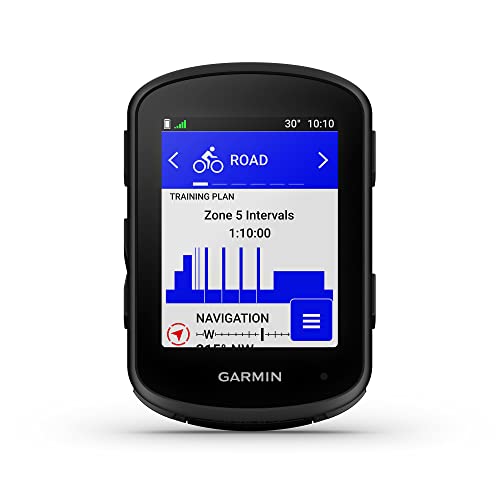
The Garmin Edge 840 is a compact GPS cycling computer featuring multi-band GNSS for precise positioning. It offers up to 26 hours of battery life, extending to 32 hours in saver mode. The device combines touchscreen and button controls for easy operation. It includes ClimbPro ascent planning and stamina insights when paired with compatible sensors. This unit suits riders seeking reliable navigation and training data in a portable form factor.
- Multi-band GNSS technology for enhanced positioning accuracy
- Up to 26 hours battery life in demanding use
- Combines touchscreen and physical button controls
- ClimePro ascent planner shows remaining ascent and grade
- Stamina insights help gauge pushing limits during rides
- Battery life is lower than the 32+ hours offered by solar models on this list
- Weighs 2.8 ounces, which is heavier than some compact competitors
- Lacks solar charging capability found in the Edge 840 Solar variant
- You want multi-band GNSS accuracy for challenging environments
- You prefer using physical buttons alongside a touchscreen
- You need detailed ascent planning via ClimbPro
- You require solar charging to extend battery life indefinitely
- You need a larger display for easier map reading
- You want a lighter device under 2.5 ounces
Verdict: The Garmin Edge 840 GPS Cycling Computer fits riders who prioritize precise navigation and button controls. It delivers solid battery performance and advanced training metrics for dedicated cyclists.

iGPSPORT BSC500 GPS Bike Computer with Sensors
Best for: riders wanting a sensor bundle with map navigation
- Display Size
- 3.3"
- Control Type
- Touchscreen and button
- Satellite Positioning
- Dual-band, 5 satellite
- Map Navigation
- Smart MAP navigation, turn reminder
- Connectivity
- Bluetooth, ANT+
- Included Sensors
- Cadence sensor, speed sensor
The iGPSPORT BSC500 offers a 3.3-inch touchscreen with button controls for clear visibility. It uses dual-band, five-satellite positioning for accurate tracking. The package includes a cadence sensor and a speed sensor. You get map navigation with voice alerts and automatic rerouting. This set suits riders who want a complete sensor bundle with smart routing features.
- 3.3-inch touchscreen with button controls
- Dual-band, five-satellite positioning
- Includes cadence and speed sensors
- Map navigation with voice alerts
- 3.3-inch display is smaller than the 5-inch screens on the Garmin Edge 1040 and 1060
- 0.58-inch height offers less screen real estate than the larger Garmin Edge 1060
- Basic GPS connectivity lacks the advanced multi-band features of premium models
- You want a complete sensor set with your computer
- You prefer a touchscreen with physical buttons
- You need automatic route rerouting
- You need a large 5-inch or larger display
- You require premium multi-band satellite accuracy
- You want a computer without included sensors
Verdict: The iGPSPORT BSC500 GPS Bike Computer fits riders who value a bundled sensor set and clear 3.3-inch visibility. It provides solid navigation for those who do not need the largest available screen.

Wahoo ELEMNT Bolt V3 GPS Cycling Computer
Best for: Minimalist riders using smartphone sync
- Display Size
- 2.3 in
- Battery Life
- 20 hr
- Satellite Positioning
- DualBand GPS
- Map Navigation
- Turn-by-turn
- Connectivity
- ANT+, Bluetooth, Wi-Fi
- Features
- Dual-Frequency GPS
The Wahoo ELEMNT Bolt V3 is a compact GPS cycling computer designed for riders who prioritize clean aesthetics and smart connectivity. It features turn-by-turn navigation, automatic route downloads, and ANT+ radar integration for vehicle awareness. Weighing just 2.96 ounces with a slim profile, it suits cyclists seeking a lightweight, button-free interface that syncs seamlessly with major fitness platforms.
- Turn-by-turn navigation for GPX, TCX, and imported routes
- Automatic route downloads and ride uploads via Bluetooth
- ANT+ radar integration for real-time vehicle proximity alerts
- Smart notifications for calls, texts, and messaging apps
- On-demand route generation using the companion app
- Requires smartphone for full smart notification functionality
- No physical buttons for tactile control while riding
- Limited to GPS satellite positioning without GLONASS or Galileo
- You want a minimalist display with no physical buttons
- You rely on automatic syncing with Strava or Komoot
- You value vehicle proximity alerts via ANT+ radar
- You need physical buttons for easy operation in gloves
- You require offline maps without a smartphone nearby
- You prefer a larger screen for detailed data views
Verdict: Wahoo ELEMNT Bolt V3 GPS Cycling Computer is ideal for riders who want a lightweight, app-driven experience with smart alerts. It fits those who prioritize seamless integration with third-party fitness platforms over tactile controls.

Garmin Explore 2 3" Touchscreen
Best for: simple map navigation and eBike routing
- Display Size
- 3"
- Control Type
- Touchscreen
- Satellite Positioning
- GPS
- Map Navigation
- Ride type-specific maps, eBike routing
- Activity
- Cycling
- Color
- White
The Garmin Explore 2 is a GPS cycling computer with a 3-inch touchscreen. It features ride type-specific maps and eBike routing. The display is visible in direct sunlight. You get preloaded activity profiles for immediate use. It tracks distance, speed, and elevation via built-in GPS. This unit suits riders who want simple navigation and clear visibility without complex button controls.
- 3-inch high-resolution touchscreen visible in direct sunlight
- Ride type-specific maps with eBike routing support
- Preloaded road, off-road, and indoor activity profiles
- Built-in GPS tracks distance, speed, and elevation
- Touchscreen interface may be less precise in wet conditions compared to button controls
- 3-inch display is smaller than the 3.3-inch screen on the iGPSPORT BSC500
- GPS-only positioning lacks multi-band accuracy found in premium models
- You prefer intuitive touchscreen navigation over physical buttons
- You ride an eBike and need battery-aware routing
- You want a device ready to use with preloaded profiles
- You need a larger screen for detailed map reading
- You require multi-band GPS for precision in dense tree cover
- You prefer button controls for operation in heavy rain
Verdict: The Garmin Explore 2 3-inch Touchscreen offers straightforward map navigation and eBike support for casual riders. It fits those who prioritize ease of use and sunlight visibility over advanced tracking precision.
Specifications side by side
| Spec | Garmin Edge 1040 Solar | Garmin Edge 1060 GPS Cycling Computer | Garmin Edge 540 GPS Cycling Computer | Garmin Edge Explore 2 3-inch GPS | Garmin Edge 840 GPS Cycling Computer | iGPSPORT BSC500 GPS Bike Computer with Sensors | Wahoo ELEMNT Bolt V3 GPS Cycling Computer | Garmin Explore 2 3" Touchscreen |
|---|---|---|---|---|---|---|---|---|
| Display Size | – | – | – | 3" | – | 3.3" | 2.3 in | 3" |
| Control Type | – | Touchscreen, buttons, voice control | – | Touchscreen | Touchscreen, buttons | Touchscreen and button | – | Touchscreen |
| Battery Life | – | Up to 20 hours (up to 60 hr saver) | Up to 26 hours (42 hours saver) | – | Up to 26 hours (32 hours saver) | – | 20 hr | – |
| Satellite Positioning | – | – | Multi-band GNSS | GPS | Multi-band GNSS | Dual-band, 5 satellite | DualBand GPS | GPS |
| Map Navigation | – | Preloaded bike-specific maps | Ride type-specific maps | Ride type-specific maps, eBike routing | Ride type-specific maps | Smart MAP navigation, turn reminder | Turn-by-turn | Ride type-specific maps, eBike routing |
| Connectivity | – | – | – | – | – | Bluetooth, ANT+ | ANT+, Bluetooth, Wi-Fi | – |
| Included Sensors | – | – | – | – | – | Cadence sensor, speed sensor | – | – |
| Features | Solar Charging | – | – | – | – | – | Dual-Frequency GPS | – |
| Activity | – | Cycling | Cycling | Cycling | Cycling | Training | Cycling | Cycling |
| Color | Black | Black | Black | White | Balck | BSC500 Set | Colour | White |
| Dimensions | 2.3 × 4.6 × 0.8 inches | 0.6 × 2.3 × 4.2 inches | 2.3 × 3.4 × 0.8 inches | 2.2 × 4.1 × 0.9 inches | 2.3 × 3.4 × 0.8 inches | – | 1.85 × 0.94 × 3.27 inches | 2.2 × 4.1 × 0.9 inches |
| Weight | 4.7 ounces | 5 ounces | 2.8 ounces | 4.1 ounces | 2.8 ounces | – | 2.96 ounces | 4.1 ounces |
| Size | One Size | Standard | One Size | One Size | – | – | – | One Size |
| Model | Edge 1040 Solar | 010-04598-00 | 010-02694-00 | 010-02703-00 | 010-02695-00 | BSC500 | WFCC9 | – |
If you ride indoors, match your computer specs against the models in the bike trainer buying guide.
Frequently asked questions
What is the best bike computer for long sunny rides?
The Garmin Edge 1040 Solar is ideal for extended trips in bright conditions. It features solar charging to boost battery life. The device has a large 4.6-inch display for clear map viewing. Weighing 4.7 ounces, it offers a robust build for riders who prioritize range and visibility over compact size.
Which cycling computer offers the best navigation and voice control?
The Garmin Edge 1060 GPS Cycling Computer balances touchscreen and button controls for performance-focused riders. It provides detailed insights and clear audio guidance. Measuring 2.3 by 4.2 inches, it fits users who need precise navigation without solar charging. Its 5-ounce weight supports dedicated cyclists seeking advanced data tracking.
Is there a lightweight bike computer with precise GPS?
The Garmin Edge 540 GPS Cycling Computer is a lightweight option for riders valuing precision. It weighs only 2.8 ounces and features multi-band GPS for accurate climbing data. The compact design suits those who prefer button controls. It delivers dedicated metrics for cyclists who want performance insights in a small form factor.
How do I choose a bike computer for eBike integration?
The Garmin Edge Explore 2 3-inch GPS Cycling Navigator supports eBike integration for practical riders. It offers clear map visibility and straightforward navigation. Weighing 4.1 ounces, it is easy to set up. This device fits users who want eBike support and map clarity without complex performance tracking features.
What bike computer is best for minimalist riders?
The Wahoo ELEMNT Bolt V3 GPS Cycling Computer suits riders who prefer app-driven experiences. It is lightweight at 2.96 ounces and features smart alerts. The device measures 1.85 by 3.27 inches. It fits users who prioritize seamless integration with third-party fitness platforms over tactile button controls for their cycling needs.
Does iGPSPORT offer a bike computer with sensors included?
The iGPSPORT BSC500 GPS Bike Computer comes with a bundled sensor set. It features a 3.3-inch display for clear visibility. This model provides solid navigation for riders who do not need the largest screen. It is designed for those who value a complete package with sensors for tracking their cycling performance.
Which Garmin model is best for button control users?
The Garmin Edge 840 GPS Cycling Computer fits riders who prioritize button controls. It delivers solid battery performance and advanced training metrics. Measuring 2.3 by 3.4 inches, it offers precise navigation. Weighing 2.8 ounces, it is suitable for dedicated cyclists who prefer tactile feedback over touchscreen interfaces for their rides.