Garmin Edge® 1040 Solar vs Garmin Edge® 550: Spec Comparison
As Amazon Associates, we earn from qualifying purchases. This means we may receive a small commission at no extra cost to you if you click through and make a purchase.
As an Amazon Associate we earn from qualifying purchases. Links on this page are affiliate links.
When comparing the garmin edge 1040 solar vs edge 550, you see two Garmin cycling computers with black casings and GPS connectivity. Both devices support cycling training and navigation. The main difference lies in their physical design and specific capabilities. The Edge 1040 Solar features solar charging and a larger form factor. The Edge 550 is more compact and includes a vivid color display with multi-band GPS for precise tracking. You should choose based on your need for battery extension versus portability.
Model
Edge 1040 Solar
Edge 550
Display Type
not listed
Color Display
Features
Solar Charging
Multi-band GPS
Width
4.6 inches
2.1 inches
Height
2.3 inches
3.6 inches
Weight
4.7 ounces
3.9 ounces
Choose the first if
- You want solar charging to extend battery life on long rides.
- You prefer a larger screen for easier data reading.
Choose the second if
- You need a more compact device that weighs less.
- You require multi-band GPS for superior accuracy in challenging terrain.
Verdict
The Edge 1040 Solar suits riders who prioritize battery life through solar charging and a larger display. The Edge 550 is better for those who want a lighter, more compact unit with precise multi-band GPS positioning.
Edge 1040 Solar vs Edge 550 Specs
Physical dimensions
Edge: Garmin Edge 1040 Solar
The Garmin Edge 1040 Solar measures 4.6 inches in width, 2.3 inches in length, and 0.8 inches in height. It presents a larger, wider profile on your handlebars. The Garmin Edge 550 is significantly more compact, measuring 2.1 inches wide, 3.6 inches long, and only 0.7 inches high. The 550 feels more streamlined and less obtrusive during rides. The 1040 Solar offers a broader screen real estate area, which may benefit riders who prefer detailed data views without zooming. The 550’s smaller footprint suits those who want a discreet device that does not dominate the cockpit space.
Weight
Edge: Garmin Edge 550 Black GPS Cycling Computer
Weight distribution matters for comfort on long rides. The Garmin Edge 1040 Solar weighs 4.7 ounces. The Garmin Edge 550 is lighter at 3.9 ounces. The 550 saves nearly an ounce of mass compared to the 1040 Solar. This difference is noticeable if you are sensitive to handlebar weight or frequently climb steep gradients. The lighter 550 may feel more agile during rapid accelerations. The 1040 Solar’s extra weight comes from its larger chassis and solar charging components. For most cyclists, both weights are manageable, but the 550 holds a slight advantage for those prioritizing minimalism.
Battery capabilities
Edge: Garmin Edge 1040 Solar
Battery performance varies significantly between these models. The Garmin Edge 550 provides up to 12 hours of standard use or extends to 36 hours in battery saver mode. The Garmin Edge 1040 Solar includes solar charging capability, which can extend battery life further under direct sunlight. Specific hour counts for the 1040 Solar are not listed in the provided data, but solar technology is designed to add continuous power during rides. The 550 offers predictable, fixed battery limits. The 1040 Solar offers potential for indefinite use in sunny conditions. Riders in bright climates may benefit more from the solar advantage of the 1040 Solar.
Display type
Edge: Garmin Edge 550 Black GPS Cycling Computer
Visual clarity is essential for quick glances while riding. The Garmin Edge 550 features a vivid color display, allowing you to see maps and data in bright colors. The Garmin Edge 1040 Solar does not have its display type explicitly listed in the provided specifications. Both devices use button controls for operation. The 550’s color display is a confirmed feature that enhances readability. Without explicit confirmation for the 1040 Solar, we cannot assume identical display technology. The 550 guarantees a color interface. The 1040 Solar likely includes a display, but the specific type remains undefined in the current data set.
GPS technology
Edge: Garmin Edge 550 Black GPS Cycling Computer
Positioning accuracy affects navigation reliability. The Garmin Edge 550 utilizes multi-band GPS with automatic 5 Hz recording. This technology ensures superior accuracy, especially in challenging environments like dense tree cover or urban canyons. The Garmin Edge 1040 Solar lists GPS connectivity but does not specify multi-band capabilities in the provided data. Multi-band GPS is a premium feature that reduces signal drift. The 550 explicitly includes this advanced positioning system. The 1040 Solar uses standard GPS technology based on the available information. For riders who prioritize precise tracking in difficult conditions, the 550’s multi-band system offers a clear technical advantage.
Which Garmin Edge fits your ride
Long-distance cyclists needing extra range
Our pick: Garmin Edge 1040 Solar
The Edge 1040 Solar includes solar charging capability. This feature extends battery life during sunny rides. You can track longer routes without worrying about power levels. The larger 4.6-inch width provides a bigger viewing area. This helps you read data clearly while riding. Choose this model for endurance events where recharging is difficult.
Riders wanting a compact lightweight device
Our pick: Garmin Edge 550 Black GPS Cycling Computer
The Edge 550 weighs only 3.9 ounces. Its compact dimensions make it less obtrusive on your handlebars. You get multi-band GPS for accurate tracking. The device offers up to 12 hours of use. Battery saver mode extends this to 36 hours. Preloaded maps assist with navigation. This unit suits those who prefer a smaller form factor.
Cyclists prioritizing physical button controls
Our pick: Garmin Edge 550 Black GPS Cycling Computer
The Edge 550 utilizes button operations for control. This allows you to navigate menus without touching the screen. It is easier to use while wearing gloves. The vivid color display ensures readability in various light. You also receive smart fueling alerts based on fitness data. This setup is ideal for riders who prefer tactile inputs.
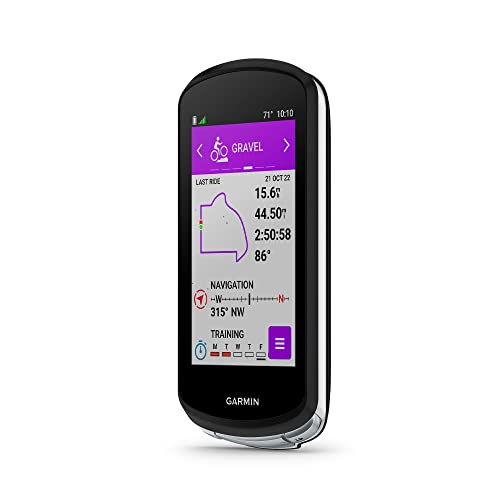
Garmin Edge 1040 Solar
Best for: Riders needing solar charging and large displays
- Connectivity
- GPS
- Features
- Solar Charging
- Color
- Black
- Dimensions
- 2.3 × 4.6 × 0.8 inches
- Weight
- 4.7 ounces
The Garmin Edge 1040 Solar is a black GPS cycling computer with solar charging capability. It measures 4.6 inches in width, 2.3 inches in length, and 0.8 inches in height. The unit weighs 4.7 ounces. This device suits riders who want extended battery life through solar assistance and detailed route tracking via GPS.
- Solar charging capability extends battery life
- 4.6-inch width provides ample screen space
- GPS connectivity for precise route tracking
- Compact 0.8-inch height fits handlebars well
- Heavier at 4.7 ounces compared to lighter models
- Larger 4.6-inch width may not suit small handlebars
- One Size option limits fit for all bike types
- You want solar charging to extend ride time
- You prefer a larger display for better readability
- You need GPS tracking for long-distance rides
- You need a lightweight device under 4 ounces
- You have small handlebars that cannot accommodate a 4.6-inch width
- You require multiple size options for different bikes
Verdict: Garmin Edge 1040 Solar fits riders who prioritize solar charging and a large display for long rides. It is less suitable for those needing a lightweight or compact device.
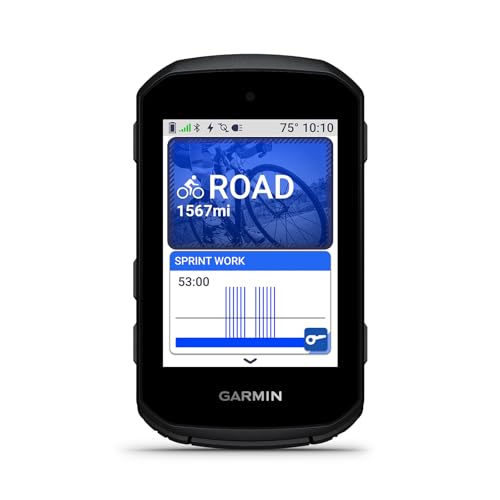
Garmin Edge 550 Black GPS Cycling Computer
Best for: Standard cycling rides under 12 hours
- Battery Life
- Up to 12 hours (36 hours saver)
- Satellite Positioning
- Multi-band GPS
- Map Navigation
- Preloaded maps
- Display Type
- Color Display
- Activity
- Training, Cycling
- Color
- Black
The Garmin Edge 550 is a compact GPS cycling computer with a vivid color display and button controls. It offers up to 12 hours of battery life, or 36 hours in battery saver mode. Multi-band GPS ensures superior accuracy. It includes preloaded maps for road, gravel, and trails. This device suits cyclists who want reliable navigation and performance tracking without solar charging.
- Multi-band GPS for superior accuracy
- Up to 12 hours battery life
- Preloaded road, gravel, and trail maps
- Vivid color display with button controls
- Battery life is 12 hours, less than the 1040 Solar
- No solar charging capability
- Standard size, heavier than some compact options
- You want reliable GPS accuracy on rides
- You prefer physical button controls
- You need preloaded map navigation
- You need solar charging for extended trips
- You want a larger touchscreen display
- You require advanced training metrics beyond basic tracking
Verdict: The Garmin Edge 550 GPS Cycling Computer fits riders who prioritize button controls and multi-band GPS accuracy over solar charging. It is a solid choice for standard cycling sessions under 12 hours.
Specifications side by side
| Spec | Garmin Edge 1040 Solar | Garmin Edge 550 Black GPS Cycling Computer |
|---|---|---|
| Battery Life | – | Up to 12 hours (36 hours saver) |
| Satellite Positioning | – | Multi-band GPS |
| Map Navigation | – | Preloaded maps |
| Connectivity | GPS | GPS |
| Display Type | – | Color Display |
| Features | Solar Charging | – |
| Activity | – | Training, Cycling |
| Color | Black | Black |
| Dimensions | 2.3 × 4.6 × 0.8 inches | 0.7 × 2.1 × 3.6 inches |
| Weight | 4.7 ounces | 3.9 ounces |
| Size | One Size | Standard |
| Model | Edge 1040 Solar | 010-03022-00 |
Frequently asked questions
Does the Edge 1040 Solar have a larger display than the Edge 550?
Yes, the Edge 1040 Solar features a significantly wider screen. Its width measures 4.6 inches, compared to the 2.1-inch width of the Edge 550. This larger display provides more space for maps and data fields. You will find it easier to read information while riding at speed.
Is the Edge 1040 Solar heavier than the Edge 550?
Yes, the Edge 1040 Solar is heavier. It weighs 4.7 ounces, while the Edge 550 weighs 3.9 ounces. The difference is 0.8 ounces. You may notice this weight difference on long rides. The solar charging hardware adds to the overall mass of the device.
Can the Edge 550 use solar charging to extend battery life?
No, the Edge 550 does not include solar charging. Only the Edge 1040 Solar lists solar charging as a feature. The Edge 550 relies on internal battery power alone. If you need extended range from sunlight, the Edge 1040 Solar is the necessary choice.
Which device is more compact for handlebar mounting?
The Edge 550 is more compact. Its width is 2.1 inches and length is 3.6 inches. The Edge 1040 Solar is much larger at 4.6 inches wide and 2.3 inches long. The Edge 550 takes up less space on your handlebars. It is better for smaller setups.
Do both devices support GPS connectivity?
Yes, both devices support GPS connectivity. This allows you to track your route and speed accurately. Both the Edge 1040 Solar and the Edge 550 use this technology for navigation. You can rely on GPS data for both standard and long-distance cycling sessions.
Is the Edge 1040 Solar suitable for riders who need solar charging?
Yes, the Edge 1040 Solar is designed for this need. It includes solar charging to extend battery life. This is ideal for long rides in sunny conditions. The Edge 550 lacks this feature. If solar power is important, the Edge 1040 Solar is the correct option.
See also
- 6 Best Alternatives to the iGPSPORT BSC300T GPS Bike Computer (2026)
- Garmin Edge® 1040 Solar vs Garmin Edge® 850: Spec Comparison
- iGPSPORT BiNavi GPS Bike Computer Alternatives: 6 Similar Picks Compared
- Garmin Edge® 1040 Solar or Garmin Edge® 1040? Which Garmin Model to Buy
- Garmin Edge® 1060 Alternatives: 6 Similar Picks Compared
- Looking Beyond the iGPSPORT BiNavi Ultra GPS Bike? 6 Alternatives Worth a Look