Garmin Edge® 1040 Solar vs Garmin Edge® MTB (2026): Key Differences
As Amazon Associates, we earn from qualifying purchases. This means we may receive a small commission at no extra cost to you if you click through and make a purchase.
As an Amazon Associate we earn from qualifying purchases. Links on this page are affiliate links.
When comparing the garmin edge 1040 solar vs edge mtb, you are looking at two distinct Garmin GPS bike computers. Both devices feature black casings and rely on GPS for positioning. The main difference lies in their design philosophy. The Edge 1040 Solar emphasizes extended range through solar charging and a larger display. The Edge MTB is built specifically for off-road trails with rugged durability and specialized mountain biking metrics. Each tool serves a different riding style.
Target Audience
Road and gravel riders needing long battery life
Mountain bikers requiring rugged durability and trail metrics
Weight
4.7 ounces
2.05 ounces
Display Size
4.6 inches width, 2.3 inches length
2 inches width, 3.1 inches length
Battery Feature
Solar charging capability
Up to 14 hours standard, 26 hours saver mode
Specialized Features
Not listed
MTB dynamics, Trailforks maps, Forksight mode, enduro/downhill profiles
Choose the first if
- You ride long distances on roads or gravel and want solar charging to extend battery life.
- You prefer a larger screen for better visibility of data and maps while riding.
Choose the second if
- You ride technical mountain trails and need rugged construction with a 7-button design.
- You want specific mountain biking metrics like Grit, Flow, and jump tracking.
Verdict
The Edge 1040 Solar is the better choice for riders prioritizing battery longevity and a large display for endurance rides. The Edge MTB is ideal for mountain bikers who need a lightweight, rugged device with specialized trail navigation and performance metrics. Your choice depends on whether you spend more time on long paved routes or technical off-road trails.
Edge 1040 Solar vs MTB Specs
Weight and Portability
Edge: Garmin Edge MTB 2.05 oz
The Garmin Edge 1040 Solar weighs 4.7 ounces, while the Garmin Edge MTB is significantly lighter at 2.05 ounces. This substantial difference affects how each device feels on your handlebars during long rides. The lighter MTB model reduces overall bike weight, which matters for climbing and technical handling. The heavier 1040 Solar includes solar charging hardware, adding mass but offering potential range extensions. You should choose the lighter unit if minimizing weight is your priority. The 1040 Solar is better if you do not mind extra ounces for solar benefits.
Battery and Charging
Edge: Garmin Edge 1040 Solar
The Garmin Edge 1040 Solar features solar charging capability, a key differentiator for extended adventures. This allows the device to extend battery life when exposed to sunlight. The Garmin Edge MTB relies on standard battery performance, offering up to 14 hours of demanding use or 26 hours in battery saver mode. The MTB does not list solar charging in its data. If you ride long distances in sunny conditions, the 1040 Solar provides a way to recharge on the go. The MTB requires you to manage power consumption without solar assistance.
Mountain Biking Features
Edge: Garmin Edge MTB 2.05 oz
The Garmin Edge MTB is purpose-built for mountain bikers, including specific ride profiles for enduro and downhill. It features preloaded Trailforks maps and Forksight mode for trail navigation. It also tracks MTB dynamics like Grit, Flow, jump speed, and hang time. The Garmin Edge 1040 Solar data does not mention these specialized mountain biking metrics or trail-specific navigation aids. The 1040 Solar focuses on broader GPS cycling features. If you ride technical trails and need detailed MTB metrics, the Edge MTB is the clear choice. The 1040 Solar lacks these specific data points in its description.
Display and Durability
Edge: Garmin Edge MTB 2.05 oz
The Garmin Edge MTB features a colorful, sunlight-readable display protected by scratch-resistant Corning Gorilla Glass. This build is designed to stand up to mud, grit, and rough conditions typical of mountain biking. The data for the Garmin Edge 1040 Solar does not specify the display type or glass material. Both devices are black, but the MTB emphasizes ruggedness for off-road use. The 1040 Solar data lacks details on display durability. If you need a screen that resists scratches from trail debris, the MTB’s Gorilla Glass is a practical advantage. The 1040 Solar’s display specs are not provided.
GPS Accuracy
Edge: Garmin Edge MTB 2.05 oz
Both devices utilize GPS for positioning, as listed in their connectivity attributes. The Garmin Edge MTB specifically highlights multi-band GPS with automatic 5 Hz GPS recording. This ensures superior accuracy and position tracking, especially while descending in enduro or downhill profiles. The Garmin Edge 1040 Solar lists GPS connectivity but does not specify multi-band technology or recording frequency in the provided data. Multi-band GPS is beneficial in challenging environments with tree cover or terrain. The MTB offers verified advanced GPS features. The 1040 Solar’s GPS capabilities are less detailed in the source data.
Which Garmin Bike Computer Fits Your Riding
Mountain bikers needing rugged trail navigation
Our pick: Garmin Edge MTB 2.05 oz
The Edge MTB features a compact 2.05-ounce design that fits your handlebars without bulk. It includes preloaded Trailforks maps and Forksight mode for upcoming trail decisions. Multi-band GPS ensures accuracy during descents, while built-in sensors track MTB dynamics like jump speed and hang time for precise performance analysis.
Road cyclists prioritizing solar extended battery
Our pick: Garmin Edge 1040 Solar
The Edge 1040 Solar offers solar charging to extend ride time in sunny conditions. Its larger 4.7-ounce build provides a substantial presence on the bike. This model is ideal for long-distance riders who need reliable GPS positioning and want to minimize battery anxiety during extended excursions without frequent recharging.
Riders wanting lightweight trail performance metrics
Our pick: Garmin Edge MTB 2.05 oz
At just 2.05 ounces, the Edge MTB is significantly lighter than the 4.7-ounce Edge 1040 Solar. It provides specialized metrics like Grit and Flow, plus automatic incident detection when paired with a smartphone. The rugged build and Corning Gorilla Glass display stand up to mud, grit, and trail hazards.
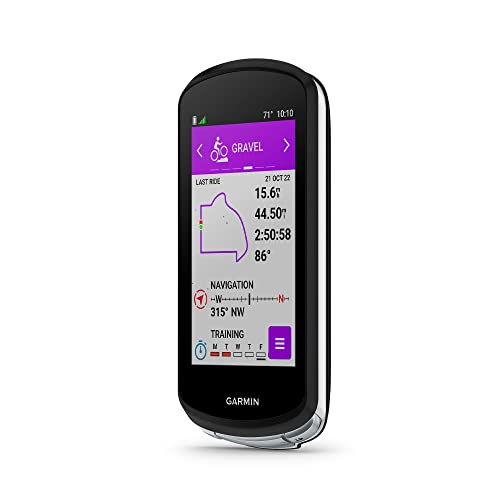
Garmin Edge 1040 Solar
Best for: long rides needing solar charging
- Connectivity
- GPS
- Features
- Solar Charging
- Color
- Black
- Dimensions
- 2.3 × 4.6 × 0.8 inches
- Weight
- 4.7 ounces
The Garmin Edge 1040 Solar is a GPS bike computer designed for extended rides. It features solar charging capability to extend battery life. The device measures 4.6 inches wide, 2.3 inches long, and 0.8 inches thick. It weighs 4.7 ounces in a black finish. This unit suits cyclists who need reliable tracking and want to minimize charging frequency during long outings.
- Solar charging capability extends battery life
- GPS connectivity for accurate tracking
- Compact 4.6-inch width fits most handlebars
- Heavier at 4.7 ounces than the Edge MTB
- Larger 4.6-inch width compared to the MTB model
- You want solar charging to extend battery life
- You need a GPS bike computer for long rides
- You prefer a larger display for better visibility
- You want the lightest possible bike computer
- You prefer a smaller, more compact device
- You do not need solar charging features
Verdict: Garmin Edge 1040 Solar is a robust GPS bike computer for riders prioritizing battery life through solar charging. Its larger size and weight suit those who value extended range over minimal bulk.

Garmin Edge MTB 2.05 oz
Best for: technical mountain biking trails and enduro riding
- Battery Life
- Up to 14 hours (26 hours saver)
- Satellite Positioning
- Multi-band GPS
- Map Navigation
- Preloaded maps
- Color
- Black
- Dimensions
- 0.8 × 2 × 3.1 inches
- Weight
- 2.05 ounces
The Garmin Edge MTB is a rugged GPS bike computer built for mountain biking. It features a 7-button design and a Corning Gorilla Glass display that resists scratches. Battery life lasts up to 14 hours, or 26 hours in saver mode. Multi-band GPS ensures accurate tracking on trails. It includes preloaded Trailforks maps and specific MTB dynamics like Grit and Flow metrics for performance analysis.
- Rugged build with 7-button design and Corning Gorilla Glass display
- Multi-band GPS with automatic 5 Hz recording for accurate tracking
- Preloaded Trailforks maps with Forksight mode for upcoming trail forks
- Built-in sensors track MTB dynamics like Grit, Flow, and hang time
- Battery life of up to 14 hours, or 26 hours in saver mode
- Battery life of 14 hours is lower than the 1040 Solar's solar-assisted duration
- Weight of 2.05 ounces is slightly heavier than typical compact bike computers
- Display size is standard, lacking the larger screen area of the 1040 Solar
- You prioritize specific mountain biking metrics like Grit and Flow
- You ride on technical trails requiring rugged durability and 7-button control
- You want preloaded Trailforks maps and Forksight navigation features
- You need solar charging to extend battery life beyond 14 hours
- You prefer a larger display for easier map reading
- You primarily ride on paved roads and do not need MTB-specific metrics
Verdict: Garmin Edge MTB GPS Bike Computer is the right choice if you need rugged durability and specific mountain biking metrics like Grit and Flow. It suits riders who value the 7-button design and preloaded Trailforks maps over extended battery life via solar charging.
Specifications side by side
| Spec | Garmin Edge 1040 Solar | Garmin Edge MTB 2.05 oz |
|---|---|---|
| Battery Life | – | Up to 14 hours (26 hours saver) |
| Satellite Positioning | – | Multi-band GPS |
| Map Navigation | – | Preloaded maps |
| Connectivity | GPS | GPS |
| Features | Solar Charging | – |
| Color | Black | Black |
| Dimensions | 2.3 × 4.6 × 0.8 inches | 0.8 × 2 × 3.1 inches |
| Weight | 4.7 ounces | 2.05 ounces |
| Size | One Size | Standard |
| Model | Edge 1040 Solar | 010-02993-00 |
Frequently asked questions
Does the Garmin Edge 1040 Solar have solar charging capabilities?
Yes, the Garmin Edge 1040 Solar includes solar charging as a key feature. This technology allows the device to extend its battery life using sunlight. It is designed for riders who prioritize long battery duration during extended rides. The Edge MTB does not list solar charging in its specifications.
Which device is better for technical mountain biking trails?
The Garmin Edge MTB is better for technical mountain biking trails. It is specifically best for technical mountain biking trails and enduro riding. It includes specific metrics like Grit and Flow. The Edge 1040 Solar is better suited for long rides needing solar charging rather than technical trail navigation.
How do the sizes of the Edge 1040 Solar and Edge MTB compare?
The Edge 1040 Solar is larger, measuring 4.6 inches in width and 2.3 inches in length. The Edge MTB is more compact, measuring 2 inches in width and 3.1 inches in length. Both devices come in black. The size difference affects how each fits on your handlebars.
Is the Garmin Edge MTB lighter than the Edge 1040 Solar?
Yes, the Garmin Edge MTB is significantly lighter. It weighs only 2.05 ounces. The Edge 1040 Solar weighs 4.7 ounces. This weight difference makes the MTB more portable and less bulky on your bike. The lighter design suits riders who value minimal bulk over extended range.
What connectivity do both Garmin Edge devices offer?
Both the Edge 1040 Solar and the Edge MTB offer GPS connectivity. This allows them to track your location and route accurately. Neither device lists additional connectivity options like Bluetooth or Wi-Fi in the provided data. GPS is the primary positioning method for both units.
Which bike computer is best for riders needing extended battery life?
The Edge 1040 Solar is best for riders needing extended battery life. Its solar charging feature helps maintain power during long rides. The Edge MTB focuses on rugged durability and trail metrics instead. If battery endurance is your priority, the solar model is the more suitable choice.
Do both devices come in black color?
Yes, both devices are available in black. The Edge 1040 Solar is listed in black. The Edge MTB is also listed in black. Color is the only shared aesthetic attribute mentioned in the data. All other physical attributes like size and weight differ between the two models.
What specific metrics does the Edge MTB provide for mountain biking?
The Edge MTB provides specific mountain biking metrics like Grit and Flow. It also features Forksight mode for trail decisions. These features support technical riding. The Edge 1040 Solar does not list these specific metrics, focusing instead on solar charging and general GPS functionality for long rides.
See also
- SRAM Hammerhead Karoo GPS Bike Alternatives: 6 Similar Picks Compared
- Garmin vs Wahoo Fitness Bike Computers: Which Brand Fits You?
- Looking Beyond the Wahoo Fitness Wahoo ELEMNT Bolt V3? 6 Alternatives Worth a Look
- iGPSPORT or Bryton? Bike Computers Compared in 2026
- 6 Best Alternatives to the Wahoo Fitness Wahoo ELEMNT ROAM V3 (2026)
- Wahoo Fitness vs Bryton Bike Computers: Which Brand Fits You?