Goal Zero Yeti Power Generator Comparison: Built for Family Reliability
As Amazon Associates, we earn from qualifying purchases. This means we may receive a small commission at no extra cost to you if you click through and make a purchase.
Goal Zero has established a strong reputation in the off-grid energy sector by engineering durable, emission-free power equipment built to handle demanding outdoor environments and sudden residential blackouts. For active households, investing in a dependable yeti power generator provides a modern alternative to loud, fuel-burning engines, combining zero-maintenance operation with advanced battery management systems designed to keep family gear running smoothly. The brand is recognized for its physical resilience, pairing reinforced housings and weather-resistant interfaces with battery cells engineered to deliver reliable output across thousands of charge cycles.
While every model in this goal zero power generators comparison shares a focus on rugged outdoor durability, they differ significantly in battery capacity, continuous inverter wattage, physical portability, and appliance compatibility—scaling from compact handheld packs for weekend outings to high-capacity storage hubs built for home emergency backup.
Product rundown
4 models are covered below. Pick a row to jump straight to it.
| No. | Model | Price |
|---|---|---|
| 01 |
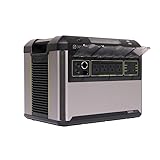 Goal Zero Yeti 1500 Portable PowerBest for Campsite Basecamps and Essential Outages Goal Zero Yeti 1500 Portable PowerBest for Campsite Basecamps and Essential Outages |
Price not listed |
| 02 |
 Goal Zero Yeti 300 Portable PowerBest for Mobile Weekend Adventures Goal Zero Yeti 300 Portable PowerBest for Mobile Weekend Adventures |
Price not listed |
| 03 |
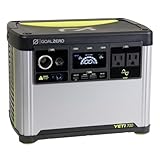 Goal Zero Yeti Portable Power StationBest for Versatile Mid-Sized Excursions Goal Zero Yeti Portable Power StationBest for Versatile Mid-Sized Excursions |
Price not listed |
| 04 |
 Goal Zero Yeti PRO 4000 PortableBest for Whole-Home Backup and Off-Grid Living Goal Zero Yeti PRO 4000 PortableBest for Whole-Home Backup and Off-Grid Living |
Price not listed |
Goal Zero Power Generators Compared
| Model | Battery Capacity | Continuous Output | Surge Output | Recharge Speed |
|---|---|---|---|---|
| Goal Zero Yeti 1500 Portable Power | 1505 Wh | 2000 W | 3600 W | 0 to 80% in under 1 hour |
| Goal Zero Yeti 300 Portable Power | 297 Wh | 350 W | 600 W | 0 to 100% in ~50 minutes |
| Goal Zero Yeti Portable Power Station | 677 Wh | 600 W | 1000 W | 0 to 100% in ~2 hours |
| Goal Zero Yeti PRO 4000 Portable | 4000 Wh | 3600 W | 7200 W | 0 to 80% in 2 hours |
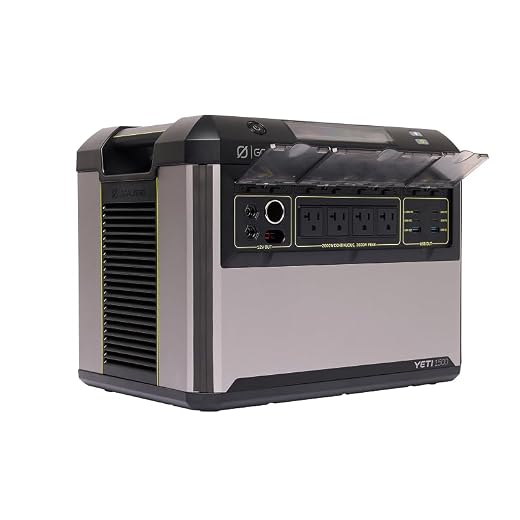
Goal Zero Yeti 1500 Portable PowerBest for Campsite Basecamps and Essential Outages
Buyer favourite4.7 or better on Amazon’s buyer average
Price not listed
4.9Amazon buyer averageOverwhelmingly positive
Brand Goal Zero ASIN B0GMKKGQCY

Best for: Whole-home emergency backup and off-grid living
Pros
- Massive 3,600W output with 7,200W surge
- Meets Military-Standard 801H durability benchmarks
- Expandable battery capacity up to 20 kWh
- Rapid solar charging reaches 80% under 90 minutes
Cons
- Heaviest footprint requiring stationary home setup
- Multi-circuit backup requires separate transfer hardware
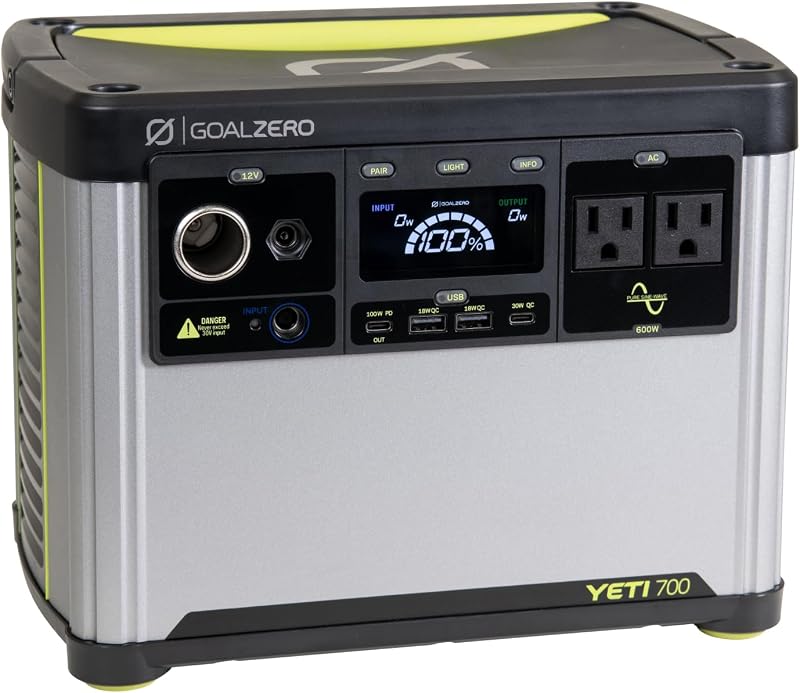
Best for: Family tailgating and overland 12-volt refrigeration
Pros
- 600W inverter handles outdoor coolers easily
- Dustproof and IPX4 water-resistant housing
- Charges completely in roughly two hours
- Reliable 4,000-cycle LiFePO4 battery cells
Cons
- Cannot run heavy 1,500W heating elements
- Provides only two AC plug ports

Best for: Weekend camping trips and portable mobile electronics
Pros
- Rapid 50-minute recharge to full capacity
- Compact weather-resistant IPX4 build
- Tested to UL2743 and particulate standards
- 4,000-plus cycle LiFePO4 operational lifespan
Cons
- Limited to single AC output outlet
- Restricted to 350W maximum continuous load
Best for: Basecamp adventures and essential household outage protection
Pros
- 2,000W continuous pure sine wave inverter
- Sub-one-hour fast AC wall recharge
- Durable IPX4 aluminum casing with bumpers
- Long-lasting 4,000-cycle LiFePO4 battery chemistry
Cons
- Substantial 24 kg carrying weight
- Requires dedicated space in vehicle trunks
The Goal Zero Yeti 1500 Portable Power is an adaptable mid-to-heavy capacity generator engineered to provide dependable energy for high-draw appliances and multi-day family camping excursions. At the center of its design is a 1505 watt-hour rechargeable battery pack paired with an inverter capable of delivering 2,000 watts of continuous AC output alongside a 3,600-watt surge ceiling. Utilizing long-life goal zero yeti lifepo4 battery chemistry rated for 4,000 operating cycles, this generator provides up to a decade of daily usage. This output allows households to power intensive appliances including full-sized refrigerators, CPAP machines, electric tools, camp lighting, phones, and laptops during grid interruptions.
Recharging speed is a notable strength, reaching 0 to 80 percent capacity from a standard 120-volt AC wall outlet in under one hour, which operates ten times faster than earlier brand generations. The interface includes four AC outlets, six USB outlets highlighted by a fast 140W USB-C port, an HPP output, a 12V vehicle outlet, and two 6mm ports. An integrated digital display provides immediate feedback on battery percentage and active wattage draw, which can also be tracked wirelessly via the Goal Zero App. Families analyzing portable capacity curves against other brand profiles can reference our blue yeti power station overview for general context regarding high-draw household appliance staging.
Durability remains central, featuring an aluminum casing, rubber bumpers, port shields, and an IPX4 weather-resistant build tested for rough-road vibrations. Weighing 24 kg, this unit requires deliberate two-handed lifting, making it best suited for vehicle-based basecamps or stationary home defense. It yields to smaller handheld units when ultralight transport is paramount, and steps aside for the larger PRO 4000 when whole-house multi-circuit transfer is required.
Goal Zero Yeti 300 Portable PowerBest for Mobile Weekend Adventures

Buyer favourite4.7 or better on Amazon’s buyer average
Price not listed
4.9Amazon buyer averageOverwhelmingly positive
Brand Goal Zero ASIN B0CRD8CVD8
The Goal Zero Yeti 300 Portable Power delivers a compact portable power generator for camping tailored for minimalist travelers, day trips, and light outdoor recreation. Built around a 297 watt-hour lithium iron phosphate battery, this lightweight generator provides 350 watts of continuous AC power with a 600-watt surge threshold. Upgraded battery technology delivers over 4,000 charge cycles, ensuring more than 10 years of daily use for active households. The internal inverter provides steady electrical flow to recharge smartphones, cameras, tablets, laptops, air mattress pumps, and outdoor illumination accessories such as the Goal Zero Skylight.
Replenishing the battery takes minimal preparation thanks to a dedicated high-speed charging mode that restores the battery from zero to 100 percent in approximately 50 minutes using an AC wall connection. For off-grid travel, connecting an external solar panel turns the device into a self-sustaining goal zero solar generator that harvests clean, renewable energy. The chassis holds an IPX4 water resistance rating, passes UL2743 safety requirements, and handles extreme operating temperatures. Readers evaluating compact travel gear can review our grecell portable power station review to compare general form factors and battery lifecycle expectations.
Operationally, the unit features a single AC outlet alongside multiple DC ports with current ratings ranging from 3A to 13.5A, supporting electric push-button starts for super-quiet energy production. Its lightweight frame allows easy one-handed carrying to park pavilions, tailgates, and campsites where quiet operation is required. However, its 350-watt continuous rating cannot run heating appliances, blenders, or kitchen power tools, making it necessary to upgrade to the mid-tier Yeti 700 if your family relies on 12-volt refrigeration or portable cooking gear.
Goal Zero Yeti Portable Power StationBest for Versatile Mid-Sized Excursions

Price not listed
4.1Amazon buyer averageMostly positive
Brand Goal Zero ASIN B0CRCVKNHR
The Goal Zero Yeti Portable Power Station, designated as the Yeti 700, strikes a practical balance between handheld travel packs and heavy emergency storage systems. Equipped with a 677 watt-hour LiFePO4 battery pack, it offers 600 watts of continuous AC output alongside a 1000-watt surge threshold (with 677 watts running wattage and 1000 watts starting wattage listed in specifications). Engineered with upgraded battery cells that supply over 4,000 cycles for more than a decade of regular use, this mid-sized generator easily powers Alta portable 12-volt fridges, outdoor pellet grills, small power tools, and mobile devices.
Charging performance remains rapid and convenient, utilizing a high-speed mode capable of replenishing the 677Wh capacity from zero to 100 percent in approximately two hours via a standard wall outlet. Integrated solar input ports allow clean off-grid recharging when paired with solar panels, transforming the unit into a dependable mobile energy station. Construction standards include particulate testing and UL2743 compliance, complemented by an IPX4 water-resistant and dustproof enclosure that operates reliably in extreme outdoor temperature swings encountered during seasonal family camping.
The interface features two AC outlets alongside USB and DC ports, allowing families to run a camping cooler and recharge mobile tablets simultaneously. The electric battery architecture ensures whisper-quiet operation, eliminating combustion exhaust so it can sit directly inside a tent, camper van, or tailgate setup. While the unit manages portable refrigeration with ease, it gives way to the Yeti 1500 when households need to run high-wattage 1,500W kitchen appliances or sustain essential home backup circuits through multi-day winter storms.
Goal Zero Yeti PRO 4000 PortableBest for Whole-Home Backup and Off-Grid Living

Price not listed
4.1Amazon buyer averageMostly positive
Brand Goal Zero ASIN B0CJCT1TC5
The Goal Zero Yeti PRO 4000 Portable represents the pinnacle of capacity and high-output performance in the manufacturer’s sixth-generation lineup, engineered primarily for severe residential outages, off-grid cabins, and large recreational vehicles. Delivering 3,600 watts of continuous power with an immense 7,200-watt surge capability, this heavy-duty unit operates standard high-draw household appliances including sump pumps, microwaves, well pumps, and full-sized refrigeration units. Its upgraded lithium iron phosphate core is rated for over 4,000 cycles for up to 10 years of daily use, backed by a 5-year warranty, and engineered to hold its charge for 12 to 18 months during long-term storage.
Replenishment speeds are engineered to handle urgent situations, boasting an 1,800-watt AC wall input that restores the internal battery from zero to 80 percent in two hours. When operating as an off-grid solar generator, the unit accepts up to 3,000 watts of solar input, achieving an 80 percent charge in under 90 minutes in optimal daylight conditions. Users can connect up to four Tank PRO 4000 expansion batteries to expand total storage up to an impressive 20 kWh. Furthermore, the unit supports direct vehicle integration and home circuit backup, capable of powering up to 10 home circuits when paired with the Haven PRO transfer system (available separately).
Built for extreme environments, the PRO 4000 meets Military-Standard 801H certification requirements for resistance against vibration, dust, water, and extreme temperatures, while maintaining UL2743 safety verification. The exterior features heavy-duty reinforcement and two AC outlets alongside specialized high-amp output ports. Because of its large physical footprint and heavy chassis, this unit is intended for stationary placement on garage floors, utility rooms, or RV storage bays, giving way to the Yeti 1500 or Yeti 700 for families seeking an agile, trunk-friendly companion for casual camping.
How to Choose the Right Goal Zero Power Generator
Selecting which goal zero power generator to buy requires balancing your family’s electrical demands against physical portability, available storage space, and emergency preparedness goals. The first step involves calculating both continuous running wattage and initial surge wattage for the specific devices you intend to power. Low-draw electronics like smartphones, LED lighting, and laptop chargers consume between 15 and 80 watts, making the compact Yeti 300 perfectly adequate for short excursions. Conversely, motor-driven gear such as full-sized refrigerators, portable air conditioners, and kitchen appliances demand substantial starting surges that require the 2,000-watt continuous output of the Yeti 1500 or the 3,600-watt inverter on the Yeti PRO 4000.
Battery capacity, measured in watt-hours, dictates how long connected devices can run between recharging cycles. For a weekend camping trip where keeping a 12-volt portable fridge running and powering a pellet grill are top priorities, the 677 watt-hours provided by the mid-sized Yeti 700 hits the sweet spot between physical weight and runtime. When faced with extended residential electrical blackouts, a higher capacity threshold is essential; the 1505Wh capacity of the Yeti 1500 or the expandable 4000Wh platform of the Yeti PRO 4000 guarantees critical medical equipment and food storage remain active for multiple days. If your family is evaluating different battery sizing methodologies for home protection, checking our westinghouse power station overview provides practical insights on load management during prolonged blackouts.
Recharging speed and energy input flexibility also play a pivotal role in field usability. Goal Zero’s high-speed AC charging profiles allow modern Yeti stations to replenish quickly, with the Yeti 300 filling in 50 minutes and the Yeti 1500 reaching 80 percent within one hour from standard wall power. When traveling off-grid for extended durations, solar input wattage becomes the limiting factor. The Yeti 300 and Yeti 700 accept standard portable panels for steady daytime maintenance, whereas the PRO 4000 accommodates up to 3,000 watts of solar input, enabling near-instant replenishment for off-grid homesteads.
Finally, consider the environmental conditions and transport demands of your adventures. The Yeti 300, Yeti 700, and Yeti 1500 feature IPX4 water resistance and specialized dust or vibration testing suited for overland trails and exposed campsites. The heavy-duty Yeti PRO 4000 elevates environmental protection to Military-Standard 801H standards, offering exceptional resilience against severe outdoor conditions. For casual trunk camping, the lightweight Yeti 300 and Yeti 700 remain the easiest to transport, while the Yeti 1500 balances portable camp basecamp utility with dependable home backup, leaving the PRO 4000 as the ultimate dedicated power backup station.
FAQ
How long does a Goal Zero Yeti LiFePO4 battery last?
The modern Goal Zero Yeti lineup features lithium iron phosphate (LiFePO4) battery chemistry rated for 4,000 or more cycles while maintaining optimal performance. For active families using a power generator on a daily basis, 4,000 cycles equates to roughly 10 years of continuous service before the battery pack experiences noticeable capacity degradation. In addition, these cells retain their charge for 12 to 18 months in storage, making them exceptionally reliable for infrequent emergency outages.
Can a Goal Zero Yeti power generator be used indoors safely?
Yes, all Goal Zero Yeti portable power stations operate using rechargeable battery cells rather than combustible liquid fuels. Because they produce zero exhaust fumes, carbon monoxide, or engine vibration, they are completely safe to operate inside living rooms, bedrooms, camper vans, and enclosed family tents. They also operate with whisper-quiet electric mechanisms, making them suitable for running CPAP medical devices overnight beside a bed without disturbance.
What is the difference between starting surge and continuous wattage on Yeti generators?
Continuous wattage refers to the sustained electrical load an inverter can output indefinitely without overheating or tripping protection circuits, such as the 2,000W output on the Yeti 1500. Surge wattage represents a brief burst of extra electrical output—such as 3,600W on the Yeti 1500 or 7,200W on the Yeti PRO 4000—engineered to start up motor-driven appliances like refrigerators, sump pumps, and power tools that require an initial spike of power to engage their motors.
How does solar recharging work with a Goal Zero solar generator?
Goal Zero Yeti power stations include dedicated solar charging input ports that regulate incoming direct current from compatible solar panels. Connecting a solar panel allows the internal charge controller to optimize voltage and current flow to refill the LiFePO4 battery pack using renewable sunlight. Charging times vary depending on panel wattage, sunlight intensity, and generator model, ranging from under 90 minutes on the Yeti PRO 4000 with high-wattage arrays to several hours on smaller portable panels.
Which Goal Zero power generator should families choose for emergency home backup?
For essential residential backup, the Yeti 1500 provides an excellent balance of capacity and portability, running full-sized refrigerators, lights, and medical devices through short blackouts. If your home backup strategy requires keeping multiple hardwired circuits running—such as well pumps, heating systems, and primary kitchen circuits—the Yeti PRO 4000 is the recommended choice due to its 3,600W output, 10-circuit Haven PRO integration, and expandability up to 20 kWh.
- Ryobi 1800W Power Station Comparison: Reliable Household Power Solutions 4.3Amazon buyer avg
- Anker 24,000mAh Class Power Banks: Heavy-Duty Portable Chargers Compared 4.5Amazon buyer avg
- ALLWEI Portable Power Station Guide: 300W Models and Family Backup Picks 4.2Amazon buyer avg
- Westinghouse Tri-Fuel Generators: Complete Home Backup Comparison 4.4Amazon buyer avg
- Hessaire Swamp Coolers Compared: Choosing the Best Model for Your Space 4.0Amazon buyer avg
- EcoFlow Battery Packs: Comparing Standalone Power & Expansion Options 4.4Amazon buyer avg